



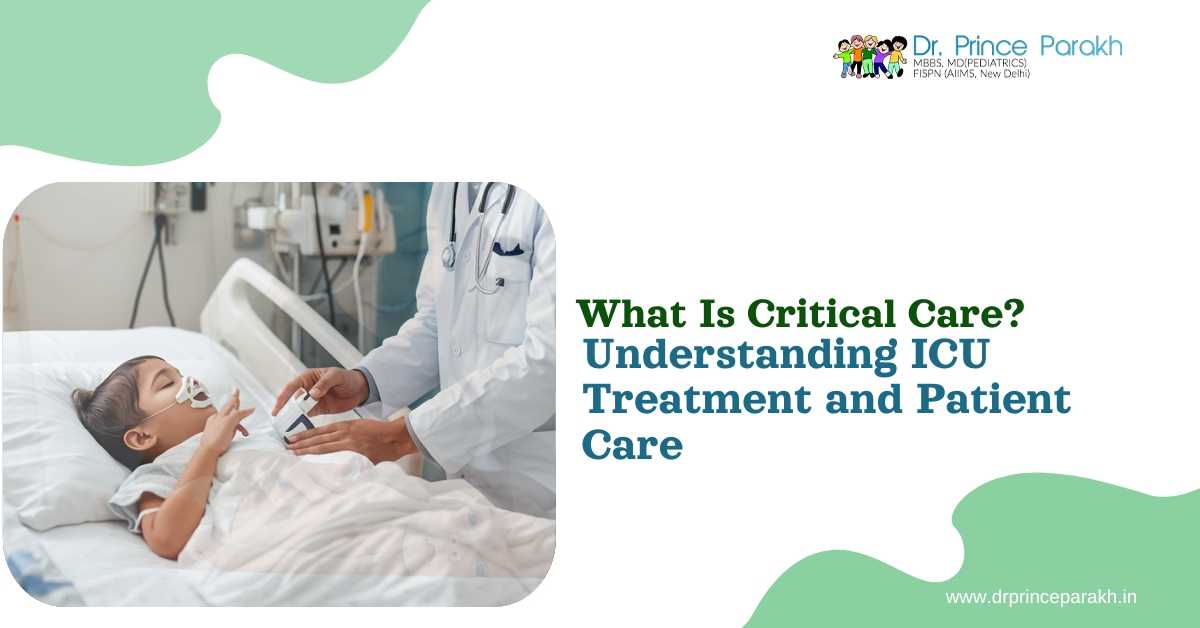


The breathing pathways, vital organs, and body proportions are distinct in children. Thus, during health emergencies in children, specialized medical intervention becomes a necessity. Choosing critical care in Siliguri or a location near you is the best way to ensure your child receives the precise, rapid attention. In this blog, we will learn about the most prominent benefits of critical care for children so that you can understand how the right medical care supports full recovery.
Also Read: 8 Signs Your Baby Needs Newborn Jaundice Treatment Immediately
Know The Benefits Of Critical Care For Children
Here are the most common benefits of pediatric critical care:
Continuous Advanced Monitoring: In a critical care environment, a child’s vital signs are tracked every second. Thus, advanced diagnostic machines continuously monitor heart rates, brain activity, oxygen saturation, and respiratory patterns. Since children can deteriorate without warning, real-time health data and monitoring become a necessity. The advanced diagnostic systems alert medical staff to minor physiological shifts before they turn into life-threatening emergencies. Whether it's for adjusting oxygen levels or changing medication dosages, the continuous flow of precise information ensures that the child’s fragile system remains constantly safe.
Specialized Pediatric Expertise: The biological system of children reacts differently to trauma, infections, and medication. Pediatric critical care units are handled by doctors and nurses who are specially trained in child physiology. Hence, they are equipped with the knowledge of how a child’s body grows, develops, and responds under extreme medical stress. This deep specialization ensures that diagnoses are highly accurate and tailored to pediatric milestones. Overall, specialized pediatric knowledge helps reduce the risk of clinical errors and significantly improves recovery rates in young children.
Rapid Life-Saving Interventions: When a child faces organ failure, severe trauma, or acute respiratory distress, every second counts. Critical care units are designed for immediate life-saving interventions by using medications and surgical tools. The medical team available in such units is trained to execute complex resuscitation protocols, secure compromised airways, and stabilize failing cardiovascular systems in seconds. Fast medical response stops severe illness in its tracks, prevents permanent damage, and saves young lives when every second counts.
Customized Anatomical Equipment: Standard hospital equipment is built specifically for adult bodies. In pediatric critical care units, specialized and scaled-down medical technology is available, designed exclusively for infants, toddlers, and teenagers. Some of the most common pediatric anatomical equipment are miniature breathing tubes, tiny intravenous needles, appropriately sized oxygen masks, and specialized incubators. The use of correct anatomical fit ensures that life-saving interventions are delivered safely without causing accidental tissue damage or unnecessary physical trauma. Therefore, having access to appropriately sized equipment allows healthcare providers to perform delicate procedures with maximum precision.
Emotional & Psychological Support: Children experience deep trauma during medical emergencies. Thus, fear and anxiety get triggered in such situations. Critical care units integrate psychological support directly into their treatment frameworks to protect a child's mental well-being. In addition, pediatric specialists use age-appropriate therapeutic play, visual aids, and gentle communication to remove fear and anxiety. Managing the emotional stress of an intensive care stay actually helps lower heart rates, reduces cortisol levels, and encourages better sleep. By prioritizing emotional aspects in children during critical care, you can ensure that children recover from severe health conditions without long-term psychological trauma.
Multi-Disciplinary Care Coordination: Pediatric critical care offers the services of various medical specialties under one coordinated plan. This holds tremendous significance because a critically ill child may require intervention from pediatric cardiologists, neurologists, surgeons, pharmacists, and respiratory therapists. The collaboration of diverse experts ensures that every aspect of the child’s complex health profile is evaluated simultaneously. In addition, conflicting treatments can be avoided through collaboration. Overall, this seamless coordination promotes faster healing, minimizes hospital stays, and ensures no detail of the child’s recovery gets ignored.
Strict Infection Prevention: It is a well-known fact that critically ill children have a weakened immune system. This makes them highly vulnerable to secondary hospital-acquired infections.Pediatric critical care units maintain strict sanitation protocols, advanced air filtration systems, and strict visitor screening measures to maintain a sterile environment. The patient rooms are designed to isolate vulnerable children from external pathogens, and the staff maintains rigorous hand hygiene protocols. Hence, the minimization of children’s exposure to harmful bacteria and viruses helps avoid the risks of dangerous secondary infections.
Focus on Family-Centred Care: Critical care providers view parents not just as visitors,but as essential partners in a child's recovery. Thus, such units focus on practicing family-centered care by actively involving parents in daily medical rounds, updates, and decision-making processes. By keeping families fully informed, the anxiety of the unknown is eliminated, and parents are empowered to advocate for their children’s well-being. In addition, these units provide dedicated emotional counseling and practical support resources for the parents. Family-centred care plays a vital role in a child’s recovery because a supported parent provides superior emotional comfort to an ill child, which directly enhances the patient's recovery environment.
Final Thoughts
During pediatric medical emergencies, standard medical care cannot deliver what specialized critical care can. By understanding the core benefits of the critical care unit for children, you will have the clarity and confidence needed to make swift choices. Remember, when every second counts, having immediate access to specialized medical expertise proves to be vital in a patient's recovery timeline. You can ensure the best critical care in Siliguri for your child by contacting a renowned pediatrician, such as Dr. Prince Parakh.
